
Worship in spirit and truth means honouring God from the heart, led by the Holy Spirit and grounded in what the Word says about Him (John 4:23-24). It is far more than singing. It is a whole life offered to God, expressed in praise, obedience, prayer and service.
Ask ten people what worship is and you may get ten answers. Some will say, "singing in church." Others will say, "the part before the sermon." Some will describe a feeling: a goose-bump moment when the music swells and the room seems full of God. All of these are connected to worship in some way, yet none of them captures what the Bible means.
What does God Himself say about worship? In perhaps the most important passage on the subject, Jesus told a Samaritan woman by a well, "But the hour cometh, and now is, when the true worshippers shall worship the Father in spirit and in truth: for the Father seeketh such to worship him. God is a Spirit: and they that worship him must worship him in spirit and in truth" (John 4:23-24).
In this article we will unpack that statement. We will look at what worship is, what it means to worship "in spirit" and "in truth," why worship must include the whole of life, how to prepare for worship, and what worship does in us.
The setting: a surprising conversation
John 4 records one of the most unexpected conversations in the Gospels. Jesus, a Jewish teacher, stopped at a well in Samaria and asked a Samaritan woman for a drink, something most Jews would never do. She came with a past, and the conversation exposed it gently but honestly. Then, when Jesus had shown her that He knew everything about her, she raised a theological question that had divided Jews and Samaritans for centuries: Where is the right place to worship? "Our fathers worshipped in this mountain; and ye say, that in Jerusalem is the place where men ought to worship" (John 4:20).
Jesus' answer turned the whole discussion upside down. The place was no longer the main issue. A new era was dawning, in which true worship would not be bound to a mountain, a city, or a building. It would be defined by who we worship and how: in spirit and in truth.
And notice the striking line: "the Father seeketh such to worship him." We usually think of worship as something we offer to God. Jesus reveals that God Himself is searching for worshippers. The Creator of the universe is looking for people who will honour Him from the heart.
What is worship?
The most common Hebrew word for worship in the Old Testament, shachah, means "to bow down," to bend low in homage. The main Greek word in the New Testament, proskuneo, carries a similar picture: to kneel or prostrate oneself before one who is greater. At its core, worship is the response of the whole person to the worth of God. The old English word worship is a contraction of "worth-ship," ascribing worth to someone.
Psalm 29:2 says, "Give unto the LORD the glory due unto his name; worship the LORD in the beauty of holiness." Worship acknowledges that God is God: holy, mighty, loving, wise, faithful, and worthy of all we are and have.
Worship is not a technique to get something from God. It is not a performance to impress people. It is not a mood we manufacture. It is the heart's honest "yes" to who God is.
What does it mean to worship "in spirit"?
Jesus said, "God is a Spirit" (John 4:24). Because God is spirit, He is not confined to a place or limited to a form. And because He is spirit, He is not satisfied with merely physical or outward acts. To worship "in spirit" includes at least three ideas.
1. From the heart
God looks beyond the surface. Through Isaiah He said of hypocritical worshippers, "This people draw near me with their mouth, and with their lips do honour me, but have removed their heart far from me" (Isaiah 29:13). Jesus quoted this against the religious leaders of His day (Matthew 15:8). Worship in spirit is real, from the inside. It is not simply going through the motions.
The psalmist prayed, "Create in me a clean heart, O God; and renew a right spirit within me" (Psalm 51:10). He knew that God "desirest truth in the inward parts" (Psalm 51:6) and that "The sacrifices of God are a broken spirit: a broken and a contrite heart, O God, thou wilt not despise" (Psalm 51:17).
2. By the Holy Spirit
The Spirit of God enables genuine worship. Paul writes, "For we are the circumcision, which worship God in the spirit, and rejoice in Christ Jesus, and have no confidence in the flesh" (Philippians 3:3). Without the Spirit, our worship is cold and mechanical. With Him, our hearts are awakened to the beauty of God and our lips are loosed in praise. "No man can say that Jesus is the Lord, but by the Holy Ghost" (1 Corinthians 12:3). Ask the Spirit to lead you every time you worship.
3. With our whole being
Worship in spirit involves our whole inner life: mind, will, and emotions. It is not only intellectual, and it is not only emotional. We love God "with all thy heart, and with all thy soul, and with all thy mind, and with all thy strength" (Mark 12:30).
What does it mean to worship "in truth"?
If worship in spirit guards against empty ritual, worship in truth guards against empty emotion. Truth has several dimensions.
1. According to who God really is
We cannot worship an imaginary God of our own making. True worship is directed to the God who has revealed Himself in Scripture and supremely in Jesus Christ, who said, "I am the way, the truth, and the life: no man cometh unto the Father, but by me" (John 14:6). Our songs, prayers, and sermons should be soaked in what the Bible says about God, not in sentiment alone.
2. According to the Word
Jesus prayed, "Sanctify them through thy truth: thy word is truth" (John 17:17). Worship that is anchored in Scripture stays balanced and healthy. This is why reading and teaching the Bible is part of worship, not separate from it. Singing truth, hearing truth, and obeying truth belong together.
3. With sincerity and honesty
Truth also means integrity: no pretending. You do not have to look more spiritual than you are. God invites us to come as we are, honestly, with our praise and our questions, our thanks and our tears. Hypocrisy in worship, saying one thing in church and living another, is something God rejects (Amos 5:21-24).
4. Through Jesus Christ
We have access to God through Jesus. "For through him we both have access by one Spirit unto the Father" (Ephesians 2:18). The writer of Hebrews urges us, "By him therefore let us offer the sacrifice of praise to God continually, that is, the fruit of our lips giving thanks to his name" (Hebrews 13:15). We do not earn a hearing by our performance; we come through the finished work of Christ.
Put together: worship in spirit and truth is heart-felt, Spirit-led, Word-shaped, Christ-centred worship. Spirit without truth becomes shallow emotionalism. Truth without spirit becomes cold formalism. God wants both.
Worship is bigger than singing
Music is a wonderful gift and a central way the Bible's people expressed worship (the Psalms are, after all, a songbook). But if we reduce worship to the song portion of a service, we miss what Scripture says.
Paul wrote, "I beseech you therefore, brethren, by the mercies of God, that ye present your bodies a living sacrifice, holy, acceptable unto God, which is your reasonable service" (Romans 12:1). The word translated "service" can also be rendered "worship." In other words, worship is a life offered to God. It includes:
- Obedience. "To obey is better than sacrifice" (1 Samuel 15:22). Doing what God says is worship.
- Thanksgiving. "In every thing give thanks: for this is the will of God in Christ Jesus concerning you" (1 Thessalonians 5:18).
- Prayer. Prayer is a conversation of reverence and love.
- Generosity. Giving to God's work and to the poor is called a "sacrifice... well pleasing to God" (Philippians 4:18; Hebrews 13:16).
- Service and work. "And whatsoever ye do, do it heartily, as to the Lord, and not unto men" (Colossians 3:23). A student studying, a trader selling honestly, or a mother caring for her children can do all of it as worship.
- Holiness. Living pure lives that honour Him.
- Witness. Telling others of the God we love.
When your whole week is surrendered to God, Sunday's songs become the overflow of a life already lifted up.
The many expressions of worship in the Bible
The Bible shows worship expressed in a rich variety of ways. We find:
- Singing and music. "O come, let us sing unto the LORD: let us make a joyful noise to the rock of our salvation" (Psalm 95:1). "Praise him with the sound of the trumpet: praise him with the psaltery and harp" (Psalm 150:3).
- Lifting hands. "Lift up your hands in the sanctuary, and bless the LORD" (Psalm 134:2).
- Clapping and shouting. "O clap your hands, all ye people; shout unto God with the voice of triumph" (Psalm 47:1).
- Dancing. "Let them praise his name in the dance" (Psalm 149:3). David danced before the LORD with all his might (2 Samuel 6:14).
- Kneeling and bowing. "O come, let us worship and bow down: let us kneel before the LORD our maker" (Psalm 95:6).
- Silence and stillness. "Be still, and know that I am God" (Psalm 46:10). "The LORD is in his holy temple: let all the earth keep silence before him" (Habakkuk 2:20).
- Reading and hearing the Word. Ezra read the law, and the people "bowed their heads, and worshipped the LORD with their faces to the ground" (Nehemiah 8:6).
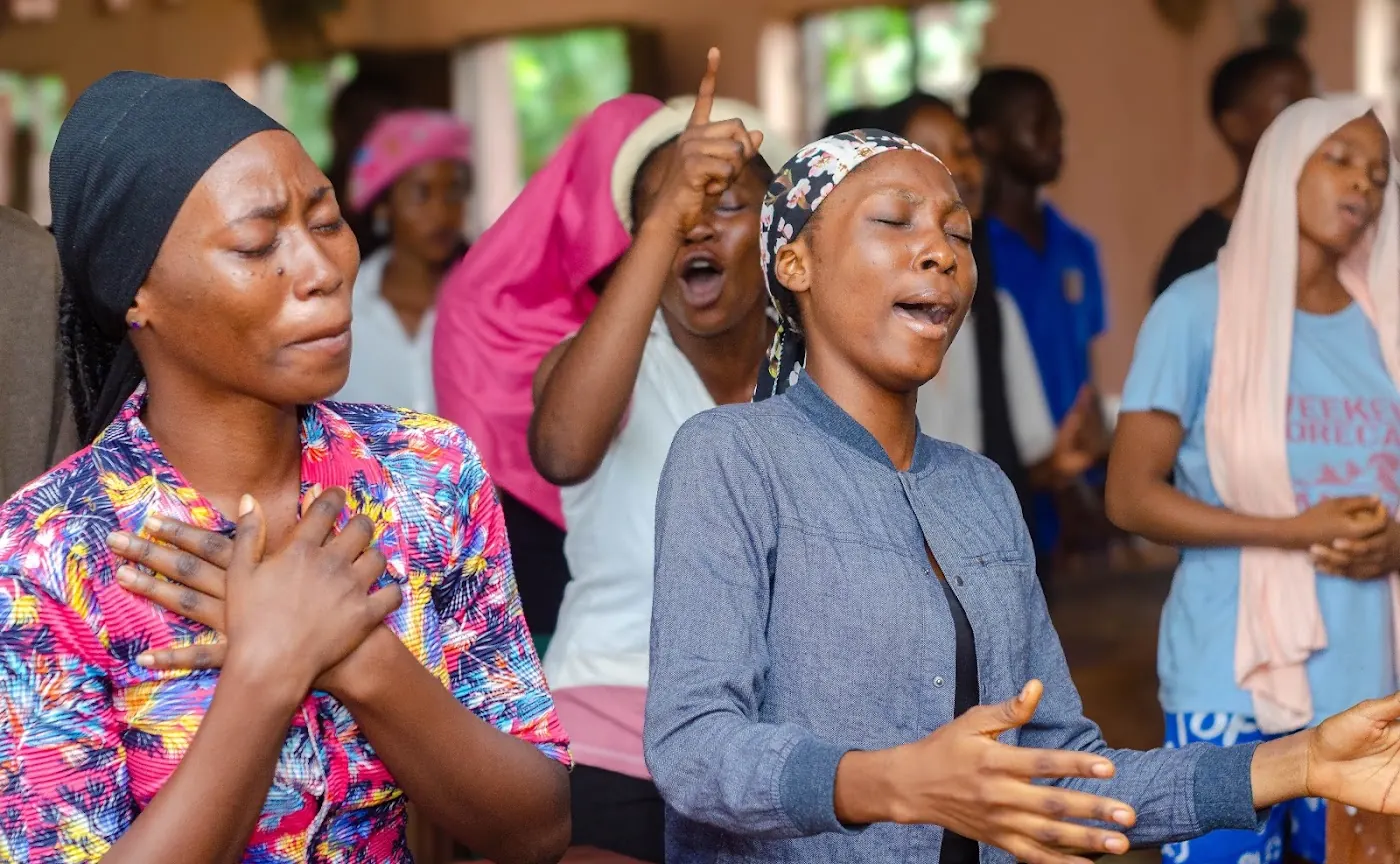
Different cultures and congregations express worship in different styles. Here in Nigeria, joyful, vibrant, full-bodied worship is a beautiful part of our heritage. Whether it is loud or quiet, what matters is the heart behind it. A quiet person is not less spiritual than an exuberant one, and an exuberant person is not necessarily more sincere than a quiet one.
When worship costs us something
Worship is not only for good days. Habakkuk wrote, "Although the fig tree shall not blossom, neither shall fruit be in the vines; the labour of the olive shall fail, and the fields shall yield no meat; the flock shall be cut off from the fold, and there shall be no herd in the stalls: Yet I will rejoice in the LORD, I will joy in the God of my salvation" (Habakkuk 3:17-18).
Job, having lost his children and wealth, "fell down upon the ground, and worshipped" and said, "the LORD gave, and the LORD hath taken away; blessed be the name of the LORD" (Job 1:20-21). And Paul and Silas sang in prison at midnight (Acts 16:25). The mark of real worship is that it does not depend on circumstances. Sacrificial praise, offered when it is hard, is precious to God (Hebrews 13:15).
A vision of God changes us: Isaiah 6
Isaiah's experience in the temple shows what happens when a person truly encounters God. He saw "the Lord sitting upon a throne, high and lifted up," heard seraphim crying "Holy, holy, holy, is the LORD of hosts: the whole earth is full of his glory," and was undone: "Woe is me! for I am undone; because I am a man of unclean lips" (Isaiah 6:1-5). Then a coal from the altar touched his lips, his sin was purged, and he heard the Lord ask, "Whom shall I send, and who will go for us?" His response: "Here am I; send me" (Isaiah 6:8).
Look at the pattern: vision of God's holiness, confession of sin, cleansing, then commission. True worship exposes us, cleanses us, and sends us. Those who truly worship are never the same.
How to prepare your heart for worship
Many of us arrive at church tired, distracted, or still thinking about the week. A little preparation makes a big difference.
- Start the night before. Get enough rest and set out what you need so Sunday morning is not frantic.
- Pray on the way. Ask the Holy Spirit to prepare your heart and to open your eyes.
- Reconcile. Jesus said, "if thou bring thy gift to the altar, and there rememberest that thy brother hath ought against thee; Leave there thy gift before the altar, and go thy way; first be reconciled to thy brother" (Matthew 5:23-24). Do not carry unresolved offences into worship.
- Confess. Ask God to forgive and cleanse you (Psalm 24:3-4).
- Arrive early. Give yourself time to settle in rather than rushing in during the second song.
- Focus on Him. When songs begin, concentrate on the words. Sing to God, not merely at a screen.
- Participate. Do not be a spectator. Stand, sing, pray, and respond.
- Come expectant. "He is a rewarder of them that diligently seek him" (Hebrews 11:6).
What worship does in us
God does not need our worship, but He delights in it, and it transforms us.
- It reorders our priorities. When God is large in our eyes, our problems look smaller.
- It strengthens our faith. Remembering who God is steadies us in uncertain times.
- It fills us with joy. "In thy presence is fulness of joy; at thy right hand there are pleasures for evermore" (Psalm 16:11).
- It breaks the grip of anxiety. Praise replaces the spirit of heaviness (Isaiah 61:3).
- It unites the church. When many voices lift one song, we are reminded that we are one body.
- It prepares us for eternity. Heaven is full of worship (Revelation 4-5, 7:9-12). Every time we worship, we rehearse for the world to come.
Worship and the Word belong together
At Adoration New Life Ministry, "worship and the Word" is more than a phrase. It is the name of our annual conference for students at Gateway ICT Polytechnic, Saapade Annex Campus, Aiyepe Ijebu, and it is a summary of how we believe church should be. The Word without worship can become dry; worship without the Word can drift. Together they keep us anchored in truth and alive in the Spirit, which is exactly what Jesus described.
If you would like to join us, our Sunday Worship Service begins at 8:00 AM at Moborode Street, Aiyepe. You can also learn more about our Worship & Word Conference, or get in touch if you have questions.
A prayer of worship
Father, You are holy, and Your name is above every name. Forgive me for the times I have approached You casually or coldly. Teach me to worship You in spirit and in truth. Let my heart be soft, my mind be filled with Your Word, and my life be a living sacrifice. Thank You for Jesus, who opened the way to You. Today, I give You my praise, my thanks, and my whole life. In Jesus' name, Amen.
Frequently asked questions
What does it mean to worship God in spirit and truth?
It means worshipping God sincerely from the heart, empowered by the Holy Spirit, and in line with the truth of who God is as revealed in Scripture and in Jesus Christ. Worship that is only outward ritual lacks spirit; worship that is emotional but ignores the Word lacks truth.
Is worship the same as singing?
No. Music is one expression of worship, but Romans 12:1 calls us to present our whole lives as a living sacrifice. Worship includes obedience, prayer, thanksgiving, generosity and service, in addition to singing.
Can I worship God alone, outside church?
Yes. Worship can happen anywhere, in your room, at work, or while walking. Believers are also called to worship together, because corporate worship strengthens faith and honours God publicly.
Why do some people lift hands, kneel or dance during worship?
The Bible records many bodily expressions of worship: lifting hands (Psalm 134:2), kneeling (Psalm 95:6), clapping (Psalm 47:1) and dancing (Psalm 149:3). The body can express what the heart feels, but what matters most is a sincere heart.
What if I don't feel anything during worship?
Worship is an act of faith, not merely of feeling. You can worship by choosing to thank God and focus on His truth even when emotions are quiet. Preparing your heart beforehand and staying consistent often deepens your experience over time.