When you do not know what to say, pray anyway. The Holy Spirit helps your weakness (Romans 8:26), Jesus gave us a pattern in the Lord's Prayer, and God values honesty over eloquence. Start with a simple structure, borrow words from the Psalms, and keep showing up.
Almost every believer has had the moment. You kneel by the bed, close your eyes, and... nothing. The words will not come. Maybe you are overwhelmed by grief, tangled in confusion, distracted by a long day, or simply embarrassed because you feel you do not "pray well." You wonder whether silence counts, or whether God is disappointed in you.
Let us start with the best news: God is not looking for polished prayers. He is looking for you. The Bible is full of honest, rough, brief, and even wordless prayers that God heard and answered. In this article we will look at why prayer feels hard, what Scripture promises about the moments when words fail, a simple pattern you can follow, how to pray the Bible itself, and practical habits that make prayer a joy rather than a chore.
Why prayer feels difficult
Before we fix a problem, it helps to understand it. People struggle to pray for several common reasons.
We think prayer needs special language. Many of us grew up hearing long, formal prayers and concluded that this is what prayer is "supposed" to sound like. But Jesus warned against this: "when ye pray, use not vain repetitions, as the heathen do: for they think that they shall be heard for their much speaking. Be not ye therefore like unto them: for your Father knoweth what things ye have need of, before ye ask him" (Matthew 6:7-8).
We feel unworthy. Guilt can make us avoid God exactly when we need Him most. But Hebrews 4:16 invites us to "come boldly unto the throne of grace, that we may obtain mercy, and find grace to help in time of need." The throne is a throne of grace.
We are distracted. Phones, noise, worry, and tiredness all compete for our attention. A wandering mind does not mean a failed prayer; it means we are human.
We do not see immediate results. When answers seem delayed, motivation drops. But delay is not denial, and Scripture repeatedly encourages persistence (Luke 18:1).
We simply do not know what to say. This is the most honest reason, and the Bible addresses it directly.
When you do not know what to pray: Romans 8:26
Paul writes, "Likewise the Spirit also helpeth our infirmities: for we know not what we should pray for as we ought: but the Spirit itself maketh intercession for us with groanings which cannot be uttered" (Romans 8:26).
Read that again slowly. The apostle Paul, one of the greatest Christians who ever lived, admitted: "we know not what we should pray for as we ought." If Paul did not always know what to say, we are in good company. And God's answer is not "try harder." His answer is the Holy Spirit, who helps us in our weakness and intercedes for us.
This means that prayer is not a one-sided effort. When you sit before God with an empty mind or a broken heart, you are not alone in that room. The Spirit of God, who lives in every believer, is praying with you and for you, according to the will of God (Romans 8:27). Sometimes the most honest prayer is a sigh, a tear, or three words: "Lord, help me."
Short prayers God heard
Scripture is full of short prayers that moved heaven:
- "Lord, save me." Peter, sinking in the waves, cried these three words, and "immediately Jesus stretched forth his hand, and caught him" (Matthew 14:30-31).
- "God be merciful to me a sinner." The tax collector, standing far off and unable even to lift his eyes, prayed this, and Jesus said he "went down to his house justified" (Luke 18:13-14).
- "Lord, remember me." The thief on the cross asked, "Lord, remember me when thou comest into thy kingdom," and Jesus replied, "To day shalt thou be with me in paradise" (Luke 23:42-43).
- "Lord, I believe; help thou mine unbelief." A desperate father prayed this honest line, and Jesus healed his son (Mark 9:24).
None of these prayers was polished. All of them were heard. God responds to faith and sincerity, not eloquence.
The pattern Jesus gave: the Lord's Prayer
When the disciples asked, "Lord, teach us to pray" (Luke 11:1), Jesus did not give them a lecture on technique. He gave them a short pattern (Matthew 6:9-13). You can use it as a framework, praying through it slowly and putting each line into your own words.
"Our Father which art in heaven." Begin with relationship. You are speaking to a Father who loves you. Take a moment to remember that.
"Hallowed be thy name." Worship. Honour God for who He is: holy, faithful, powerful, kind.
"Thy kingdom come, Thy will be done in earth, as it is in heaven." Surrender. Ask for God's purposes to be fulfilled in your life, your family, your church, and your nation, and lay down your own agenda.
"Give us this day our daily bread." Provision. Bring your practical needs: food, school fees, work, transport, health. God cares about the ordinary.
"And forgive us our debts, as we forgive our debtors." Forgiveness. Confess your sins and release those who have wronged you.
"And lead us not into temptation, but deliver us from evil." Protection. Ask for strength to resist temptation and for deliverance from harm.
"For thine is the kingdom, and the power, and the glory, for ever." End with praise and trust. (Some Bible manuscripts omit this closing line, but it is a fitting conclusion to the prayer and echoes the praise of the Old Testament.)
You do not have to rush. Many believers spend ten or fifteen minutes on one line, letting it open up all that is on their heart.
A simple four-step method you can use today
If the Lord's Prayer feels too big, try this simple four-part structure. Many Christians remember it with the letters A-C-T-S.
1. Adoration: tell God who He is
Start by praising God, not asking for anything yet. You might say, "Father, You are good. You are faithful. You are the Creator of heaven and earth." This turns your attention from your problems to His greatness, which puts everything in perspective. Psalm 29:2 says, "Give unto the LORD the glory due unto his name; worship the LORD in the beauty of holiness."
2. Confession: be honest about your sin
Name what you have done wrong: not in vague terms, but honestly. "Lord, I was angry with my brother. I was dishonest. I neglected You this week." Then receive forgiveness, because "If we confess our sins, he is faithful and just to forgive us our sins, and to cleanse us from all unrighteousness" (1 John 1:9). Do not stay in guilt; receive the cleansing He promises.
3. Thanksgiving: remember what He has done
List specific things you are grateful for: health, family, a job, protection on the road, answered prayers, and above all, salvation through Jesus. Thanksgiving builds faith. "Be careful for nothing; but in every thing by prayer and supplication with thanksgiving let your requests be made known unto God" (Philippians 4:6).
4. Supplication: ask for what you need
Now bring your requests, for yourself and for others. Be specific. Pray for your family, your church, your leaders, your community, the sick, the unsaved, and your own needs. "And the peace of God, which passeth all understanding, shall keep your hearts and minds through Christ Jesus" (Philippians 4:7).
Doing this in order, even in a few sentences each, can turn a blank mind into a full, meaningful time of prayer.
Pray the Bible back to God
When your words run out, borrow God's. The Psalms were written as prayers, and they cover every human emotion: joy, sorrow, fear, anger, doubt, hope. Pick a psalm and read it slowly, aloud, pausing to personalise it.
- When you are anxious: Psalm 23 or Psalm 46.
- When you have sinned: Psalm 51: "Have mercy upon me, O God, according to thy lovingkindness: according unto the multitude of thy tender mercies blot out my transgressions."
- When you are grateful: Psalm 100 or Psalm 103.
- When you are discouraged: Psalm 42 or Psalm 121.
- When you want to praise: Psalm 145 to 150.
Here is how it works. If you read Psalm 23:1, "The LORD is my shepherd; I shall not want," you might pray: "Lord, You are my shepherd. Thank You that I do not lack what I truly need. Lead me today." You are letting Scripture shape your words. This also protects you from praying only about your own preferences, because you are saying back to God what He has already said.
Be honest. God can handle it
Many of the psalms are raw. David asks, "How long wilt thou forget me, O LORD? for ever? how long wilt thou hide thy face from me?" (Psalm 13:1). Jeremiah complains. Job pours out his bitterness. And God does not rebuke them for honesty. Real prayer includes lament.
So if you are angry, confused, or grieving, say so. "Lord, I don't understand what You are doing. I am hurting. Help me trust You." This kind of honesty is not disrespect; it is relationship. Casting "all your care upon him; for he careth for you" (1 Peter 5:7) means giving Him the real, unedited burden.
Practical habits that make prayer easier
1. Choose a regular time and place. Jesus said, "when thou prayest, enter into thy closet, and when thou hast shut thy door, pray to thy Father which is in secret; and thy Father which seeth in secret shall reward thee openly" (Matthew 6:6). Find a quiet corner and a consistent time, perhaps early morning before the day gets busy, as Jesus did (Mark 1:35).
2. Start small. Five minutes done daily is better than an hour done once a month. As the habit grows, so will the time.
3. Write your prayers. Keep a notebook. Writing slows the mind, reduces distraction, and gives you a record of answered prayer to look back on.
4. Pray aloud or in a whisper. Spoken words help focus a wandering mind.
5. Keep a prayer list. Divide it by days of the week so you are not overwhelmed: family on Monday, church on Tuesday, community on Wednesday, and so on.
6. Pray throughout the day. Paul says, "Pray without ceasing" (1 Thessalonians 5:17). This is not about being on your knees all day, but about staying in conversation with God while you walk, work, or travel: short, silent prayers of thanks, help, or guidance.
7. Be still and listen. Prayer is a conversation. After speaking, pause. Read a passage of Scripture and ask, "Lord, what are You saying to me through this?" Ask the Holy Spirit to bring to mind what you should do or pray.
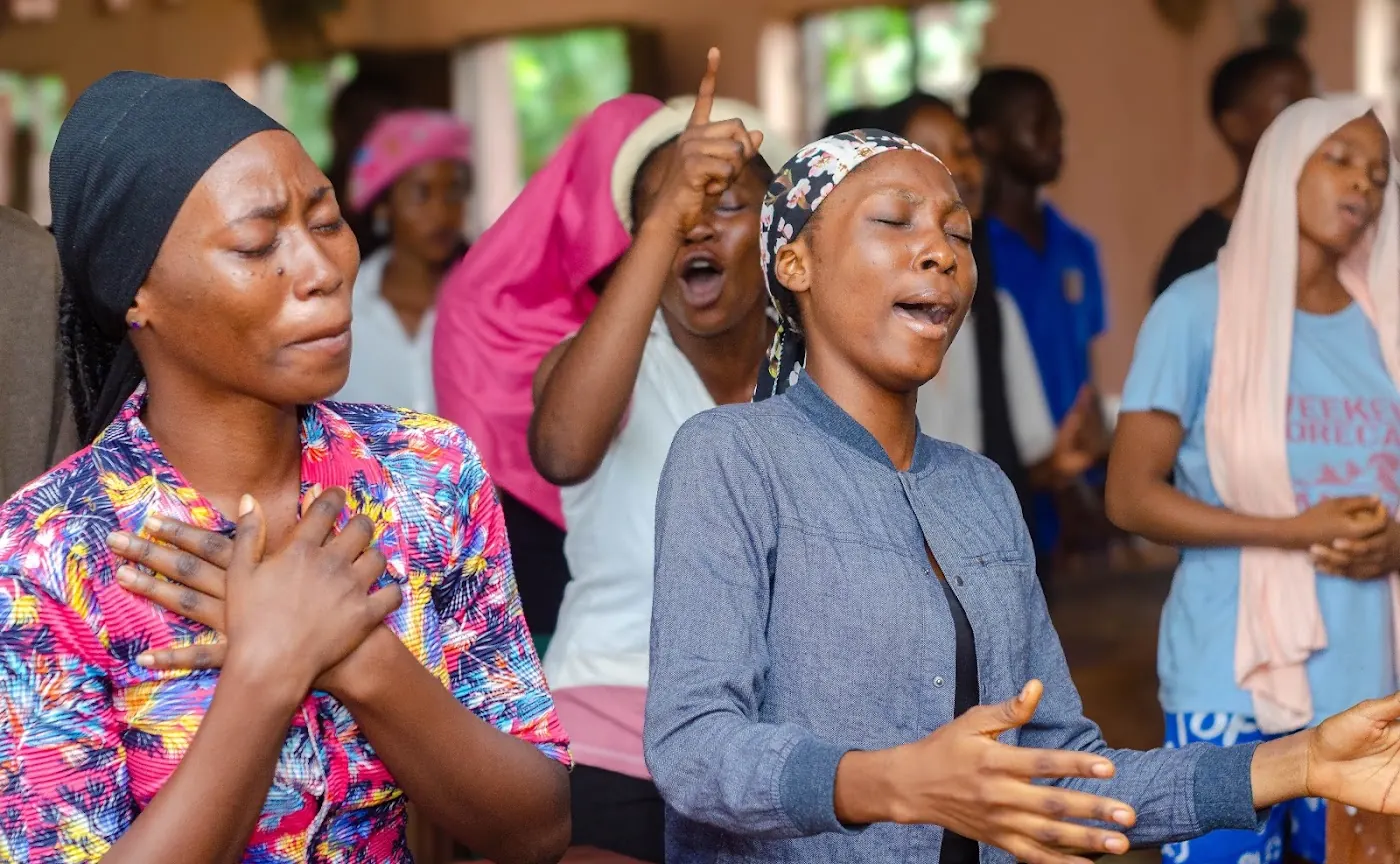
8. Pray with others. Join a prayer meeting. There is strength in agreement (Matthew 18:19-20). At Adoration New Life Ministry we hold a Monday Prayer Meeting from 5:00 to 6:00 PM, and a Wednesday Hour of Mercy from 10:00 to 11:00 AM. Praying alongside others often lifts you when your own faith feels low.
What about distractions?
Everyone's mind wanders. When it does, do not scold yourself. Gently bring your attention back. A few tips:
- Keep a notepad nearby. If you remember a task, write it down and return to prayer.
- Silence your phone and keep it out of reach.
- If you are sleepy, stand up or walk as you pray.
- If your thoughts drift to worries, turn them into prayers. "Lord, I'm thinking about my exams. Please help me."
When prayers seem unanswered
At times we pray earnestly and see no change. Here is what Scripture teaches us.
God answers in different ways. Sometimes the answer is yes, sometimes no, sometimes wait, and sometimes "I have something better." Paul prayed three times for the thorn in his flesh to be removed, and God answered, "My grace is sufficient for thee: for my strength is made perfect in weakness" (2 Corinthians 12:9). The answer was not removal, but sufficient grace.
God's timing is different from ours. Abraham waited years for Isaac. Joseph waited years in prison. Hannah waited years for Samuel. Delay is not abandonment.
Persist. Jesus told a parable "to this end, that men ought always to pray, and not to faint" (Luke 18:1). Keep knocking.
Check your heart. Sometimes unforgiveness or hidden sin hinders prayer (Mark 11:25; Psalm 66:18). Ask God to search you, then receive His forgiveness and move on.
Trust the One you are praying to. The point of prayer is not to get things from God, but to know God. He is a good Father, and "no good thing will he withhold from them that walk uprightly" (Psalm 84:11).
If you feel nothing
Faith is not feeling. There will be days when prayer feels warm and days when it feels dry. Pray on both. Many mature Christians say their most fruitful seasons of prayer came after long stretches of seemingly unresponsive devotion. Prayer is not mainly about generating an emotional experience; it is about meeting a faithful God who is present whether we feel Him or not.
If prayer has felt cold for a long time, try these:
- Read a short passage of Scripture before praying.
- Play worship music and sing along.
- Pray with a friend or at a prayer meeting.
- Speak with a pastor or mature believer about your struggle.
A sample prayer when you don't know what to say
If you need a place to begin, here is a simple prayer you can adapt:
Father, I come to You as I am. I don't have the right words, but I know You hear me. Thank You for loving me and for sending Jesus to die for me. Forgive me where I have failed. Thank You for what You have done in my life. Please help me with [name what you are facing], and bless those I love. Holy Spirit, pray through me where I cannot find words. Teach me to pray and to trust You more. In Jesus' name I pray, Amen.
Pray, and you will grow
No one learns to pray by reading about it. You learn by praying. Start today, even if it is a single sentence. God does not grade your performance; He welcomes His child. As you keep returning to Him, you will find that prayer becomes less of a duty and more of a delight, the daily conversation of a child with a Father who loves them.
If you would like someone to pray with you, we would be honoured. You can send a prayer request, join us in Aiyepe for our Monday Prayer Meeting or Wednesday Hour of Mercy, or come to the Month-End Night Vigil on the last Friday of every month. You are not praying alone.
Frequently asked questions
How do I start praying if I have never prayed before?
Start by speaking to God as you would to a loving father: honestly and simply. Thank Him for something, tell Him how you feel, ask for what you need, and end in the name of Jesus. You do not need special words, only a sincere heart.
What should I say when I don't know what to pray for?
Pray the Lord's Prayer slowly, line by line, or read a psalm aloud and turn it into your own prayer. You can also simply say, "Lord, I don't know what to say, but I'm here." Romans 8:26 promises that the Holy Spirit helps us when we do not know how to pray.
Does God hear me if my prayer is short or badly worded?
Yes. God looks at the heart, not the grammar. Short prayers in the Bible, such as "Lord, save me" and "God, be merciful to me a sinner," were heard and answered.
How long should I pray each day?
There is no required length. A beginner can start with five to ten minutes at a regular time and grow gradually. Consistency matters more than duration.
Why do I feel nothing when I pray?
Feelings come and go. Prayer is built on God's promises, not on emotions. Keep praying, keep reading the Bible, and consider praying with others, which often strengthens faith.